
Can Criminal Charges Be Dismissed in Harris County?
Yes. Criminal charges in Harris County can be dismissed when the evidence does not support prosecution, a legal problem prevents the case from proceeding, or an eligible defendant completes an agreement that provides for dismissal. The reason matters. Hiring a lawyer, pleading not guilty, or having a complainant ask to drop the charges does not automatically end a case.
Before I can give you a meaningful answer about dismissal, I need to examine the charge, the evidence, and where the case stands. An arrest report tells me what someone has alleged. It does not settle what happened or what the State can prove.
Who can dismiss a criminal case in Harris County?
In the ordinary prosecution-led dismissal process, the prosecutor files a written statement explaining the reasons for dismissal and obtains the court's permission. That procedure appears in Article 32.02 of the Texas Code of Criminal Procedure.
A defense lawyer can present evidence, identify legal defects, negotiate with the prosecutor, and file motions when there is a legal basis. A judge's authority to end a prosecution over the State's objection is limited by the legal grounds recognized in Texas law. A general argument that the accusation is unfair is not a substitute for a recognized legal ground.
The person who reported the incident does not control the prosecution. Their account and wishes can matter, but the case is brought by the State of Texas. That distinction becomes especially important when a couple reconciles or a witness changes their account.
What can support dismissal of criminal charges?
Evidence that does not establish the charged offense
I start by separating each part of the offense from the evidence offered to prove it. Who identified the defendant? What establishes intent? Does a recording support the report? Are there records or witnesses that place events in a different light?
Under the constitutional rule explained in In re Winship, the State bears the burden of proving the facts necessary for a criminal conviction beyond a reasonable doubt. The standard is not “beyond a shadow of a doubt,” and the defense does not carry a general burden to prove innocence.
There may be enough information to make an arrest but substantial problems with proving the case at trial. Those problems can give the prosecutor a reason to dismiss. They do not necessarily allow a judge to conduct an early trial of the evidence and throw out the case simply because the defense disputes it.
Unlawfully obtained evidence
A stop, search, seizure, or interrogation may raise a challenge to whether particular evidence can be used. Article 38.23 addresses evidence obtained in violation of law and includes an exception for certain good-faith reliance on a warrant.
If a court excludes evidence the prosecution needs, dismissal may follow. But suppression and dismissal are separate decisions. The State might still have other admissible evidence, dispute whether exclusion is required, or pursue an available appeal.
For someone who has not yet been charged, read what to do if Houston police want to question you. Trying to fix an accusation through another interview can create additional evidence before a lawyer has examined the existing case.
Evidence that changes the account of what happened
A complete message thread may tell a different story from one screenshot. A receipt may help establish a timeline. Surveillance footage may show what happened before the moment described in a report. In an appropriate case, medical records, location evidence, or an independent witness may be important.
These are examples of material worth investigating, not automatic dismissal grounds. Save originals and tell your lawyer where other evidence may exist. Do not edit files, delete unfavorable messages, or ask someone to change their story. Your lawyer needs the difficult facts as well as the helpful ones.
A legal barrier to continuing the prosecution
Some cases raise questions about limitations, double jeopardy, or the constitutional right to a speedy trial. The facts and procedural history determine whether those issues apply and what remedy is available.
Delay alone does not establish a speedy-trial violation. In Barker v. Wingo, the Supreme Court described a balancing analysis involving the length of delay, the reason for it, the defendant's assertion of the right, and prejudice. Counting court resets does not answer those questions.
Completion of an appropriate diversion agreement
In some cases, a pretrial intervention or diversion agreement can provide a path to dismissal after specified requirements are met. Eligibility and terms depend on the charge, history, available program, and decisions of the officials involved. Being a first-time defendant does not guarantee admission.
Before accepting an agreement, understand its requirements, what happens if you do not finish, whether it requires admissions, and how it affects your record. An agreement that offers dismissal later must be evaluated differently from a case that should be challenged now. Deferred adjudication also has its own rules and consequences; it should not be treated as interchangeable with pretrial diversion.
How I approach a dismissal request
I have practiced law in Texas since 2002, and my background includes serving as a felony prosecutor in Harrison County. That experience informs how I examine a prosecution file: what supports the charge, what is missing, and what would actually persuade a prosecutor or a court to act.
- Confirm the charge and court. I need the cause number, county, pending settings, bond conditions, and any related cases. A misdemeanor and a felony can involve different courts and procedural steps.
- Obtain and examine discovery. The relevant material may include reports, recordings, photographs, forensic work, and witness statements. Article 39.14 governs Texas criminal discovery, including disclosure obligations and restrictions on sharing material.
- Investigate beyond the report. I consider what independent records, witnesses, or expert analysis could test the accusation. The prosecution's file may not contain everything the defense needs.
- Choose the right way to present the issue. Depending on the case, that may involve a documented request to the prosecutor, a motion, a hearing, or preparation to challenge the evidence at trial.
- Explain the choices and consequences. A dismissal request can be refused. You need to understand the evidence, available offers, trial risks, and record consequences before making a decision.
If the arrest just happened, our guide to what happens after an arrest in Harris County covers the immediate steps. Our Harris County criminal defense page provides the local court context.
A documented Harris County dismissal
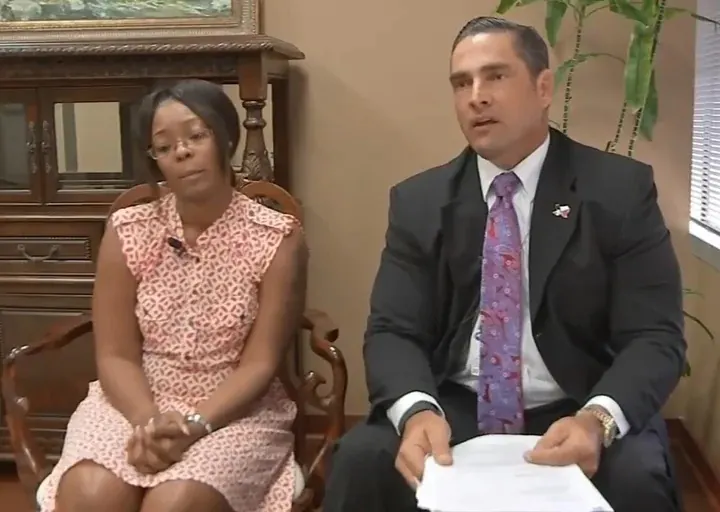
I represented Charnesia Corley following the Harris County traffic stop and roadside search that drew national coverage. The misdemeanor marijuana-possession and resisting-arrest charges against her were dropped. Her case illustrates why the circumstances behind an accusation deserve close attention.
Read the Charnesia Corley case account and its reporting sources for the documented history. That outcome does not establish what will happen in another person's case. Past results do not guarantee future outcomes.
Dismissal, no-bill, and acquittal mean different things
When someone says a lawyer “beat the case,” ask what the actual disposition was. The paperwork matters.
- Dismissal: The pending prosecution or charge is terminated. Whether another prosecution is possible depends on the legal basis and circumstances.
- Grand jury no-bill: A grand jury declines to indict. This is not a trial verdict, and it does not necessarily prevent a later presentation.
- Acquittal: A judge or jury returns a not-guilty decision at trial. This carries protections against another prosecution for the same offense that an ordinary pretrial dismissal may not provide.
- Charge reduction: A less serious charge replaces or resolves the original accusation. A reduction can still result in a conviction and lasting consequences.
Our documented case results identify different outcomes. A jury acquittal should never be advertised as though the prosecution voluntarily dismissed the case.
What happens after a case is dismissed?
Get the order and confirm what it covers
Ask for the signed dismissal order and check the cause number. If you face multiple charges, confirm the status of each one. A dismissal in one file may leave another case, warrant, hold, or separate protective order in place.
Have your lawyer confirm whether further appearances are required and what happens to the bond and any conditions. Do not remove a monitor or resume prohibited contact based on an informal message that the case is over. The Harris County District Clerk provides access to court information, but a docket label alone may not explain every obligation.
Ask whether the charge could return
A dismissal does not always permanently bar prosecution. Refiling can depend on the grounds for dismissal, applicable time limits, double-jeopardy rules, and the terms of any agreement. Ask your lawyer to explain the actual order rather than relying on the word “dismissed” by itself.
Address the arrest record separately
Dismissal does not automatically erase an arrest from every database. Texas expunction law is now organized in Chapter 55A of the Code of Criminal Procedure. Eligibility and procedure depend on how the case ended and other statutory conditions.
Ask whether you qualify, when relief can be sought, and which records an order would cover. Expunction and nondisclosure are different remedies. Before answering a licensing, immigration, or employment question about the case, get advice that addresses the wording of that question and your actual record.
Common questions about dismissal in Harris County
Can the complainant drop the charges?
The complainant can communicate with the prosecution, but cannot order dismissal. A request not to prosecute or a changed account may be evaluated alongside other evidence. Do not pressure the complainant or violate a no-contact condition. Give relevant information to your lawyer.
Will the case be dismissed if a witness does not show up?
Not automatically. The court may consider a continuance, and the prosecution may have other evidence. Whether a witness's absence prevents the State from proceeding depends on the setting, the reason for the absence, and the evidence available.
Does a police mistake guarantee dismissal?
No. The question is what the mistake affects and what remedy the law provides. A misspelled name, a disputed detail, and an unlawful search can raise very different issues. Your lawyer needs to assess the actual error and its consequences.
How long does it take to get charges dismissed?
There is no reliable universal timeline. Obtaining recordings, waiting for forensic results, investigating witnesses, negotiating, or scheduling a hearing can take time. Ask what work remains and what the next setting is for. A promise of dismissal by a particular date deserves careful scrutiny.
Can felony charges be dismissed too?
Yes. Dismissal is possible in both misdemeanor and felony prosecutions. The seriousness of a charge makes careful preparation more important; it does not tell you by itself whether dismissal is available. The allegation, evidence, and procedural history must be examined.
What should I bring to a consultation?
Bring your court and bond papers, cause number, next court date, and any documents you already have. Make a private timeline and a list of possible witnesses or recordings. You do not need a complete file before calling, and you should not contact witnesses to coordinate accounts.
Let’s look at the case behind the charge
If you are facing a criminal charge in Houston or Harris County, my office can discuss the accusation, the next court setting, and what needs to be examined. The initial consultation is free. Payment plans are available, with terms discussed for the representation.
Call 713-224-4444Request a consultationOur Houston office is at 1001 West Loop South, Suite 700. If the case is filed outside Harris County, tell us the county when you call so we can discuss the correct court and next steps.

Sam R. Cammack III is a highly experienced criminal defense lawyer and former prosecutor serving the Houston area with over 20 years of legal expertise. Dedicated to protecting his clients’ rights, he has successfully defended cases ranging from misdemeanors to serious felonies.
Sam received his Bachelor’s Degree in Psychology with honors from the University of Houston and graduated Magna Cum Laude with a Doctorate of Jurisprudence. A standout legal scholar, he finished first in his class in eleven different areas of law, received the prestigious Prima Excellencia award, and interned at the 14th Court of Appeals with Justice Eva Guzman. Known for his sharp analytical skills and strategic defense, he remains steadfast in his pursuit of justice for every client.