
Quick Answer
Specialty matters because criminal charges are not interchangeable. A DWI turns on breath-test calibration, a drug case turns on search and seizure, and a fraud case turns on documents and forensic accounting. A Houston criminal defense attorney who works in your charge area already knows where the state’s case is usually weak. Before hiring, ask how many cases like yours they have handled in Harris County, whether they are board certified in criminal law by the Texas Board of Legal Specialization, and when they last tried a case like yours to verdict.
Key Takeaways
| Same license, different practice. A personal injury or divorce attorney can legally take your case. That does not mean they know suppression doctrine or Harris County plea practice. | |
| Charge type changes the entire playbook. Homicide runs on forensic pathology and self-defense law. Drug cases run on the Fourth Amendment. Fraud runs on documents. Different fights entirely. | |
| Board certification is verifiable. The Texas Board of Legal Specialization certifies attorneys in criminal law after trial requirements, peer review, and an exam. You can confirm it through the State Bar. | |
| Expect candor, not a scoreboard. Ethics rules prevent win-rate claims. What an attorney can discuss is case volume, trial frequency, and an honest read on your realistic outcomes. | |
| One question separates them. Ask what the state’s usual weak points are in this type of case. Someone who works the area answers immediately and specifically. | |
| Asking questions is your right. Consultations exist for this. Meet with more than one attorney and hire the one who explains your situation clearly instead of retreating into jargon. |
Past results do not guarantee a similar outcome. This content is general information, not legal advice.
Stop What You’re Doing Right Now
Stop what you’re doing right now. Before you get too involved with a Houston criminal defense attorney, you can save yourself a lot of anxiety by finding out what the attorney’s specialty is. Everyone has a specialty, even though you are looking for a criminal defense lawyer. The legal profession has a lot of different areas of expertise. Finding one in the area that you’ve been charged with is critical to your case. Don’t waste your time or money with anyone who isn’t well-versed in the laws revolving around your particular (alleged) crime.
Think of it the way you would think about medicine. A licensed physician can technically treat anything. But nobody schedules heart surgery with a dermatologist because both went to medical school. The credential is the same; the daily practice is not. Law works identically — and the stakes in a criminal case are comparable.
Criminal Defense Is Its Own Discipline
There are all sorts of different lawyers in the Houston area. Some are personal injury lawyers while others are criminal defense lawyers. You’d want to look for a Houston criminal defense attorney, not a personal injury, divorce, or any other kind of lawyer. They will know the laws better and be able to defend you more effectively in a court of law. There may be lawyers in other areas willing to represent you. But you shouldn’t have to settle for a subpar lawyer when someone accuses you of a crime.
The gap is wider than most people assume. Criminal defense runs on rules that barely touch civil practice: constitutional suppression doctrine, the Texas Code of Criminal Procedure, grand jury procedure, plea negotiation with an office that has its own internal policies, punishment ranges and enhancement schemes, and jury selection in a courthouse where the same judges and prosecutors appear week after week.
A skilled civil litigator entering a criminal courtroom is learning that system on your case. There is no reason to fund that education with your freedom.
Match the Attorney to the Charge
Once you have located a Houston criminal defense attorney, your job isn’t over. There are a lot of different criminal defense fields out there. You would want to make sure that your lawyer represents you appropriately. Look at what your charges are. Then, find a lawyer who has that particular expertise. Murder, sex crimes, theft, grand larceny, arson, and much more are all separate categories. Make sure that you have the right lawyer for the job. There are a lot of legalities that come with each and every type of crime. When you don’t want to see the inside of a jail cell, you need the best.
Here is what that difference actually looks like in practice:
- Homicide and violent offenses — self-defense law under Texas Penal Code Chapter 9, forensic pathology, crime scene reconstruction, and expert witnesses who need to be challenged on their methodology, not just their conclusions.
- Sex offenses — outcry witness rules, forensic interview protocols, and registration consequences that must shape strategy from the very first plea discussion.
- Drug charges — search and seizure doctrine above all: was the stop justified, was consent valid, did the warrant have probable cause, was the lab analysis reliable.
- DWI and intoxication offenses — breath test maintenance records, blood draw chain of custody, retrograde extrapolation, and standardized field sobriety test administration.
- Theft, fraud, and white collar — document review, forensic accounting, aggregation rules that turn small amounts into felonies, and often parallel federal exposure.
- Arson and property crimes — fire origin and cause analysis, which has been the subject of significant scientific revision and is frequently attackable.
- Family violence — recantation dynamics, protective order interplay, and the firearm and immigration consequences that attach to these convictions specifically.
Each of these has its own case law, its own commonly used state experts, and its own predictable weak points. An attorney who works in that area already knows where to look.
What “Board Certified” Actually Means in Texas
There is a formal credential worth knowing about. The Texas Board of Legal Specialization certifies attorneys in criminal law, and the requirements are substantial: years in practice, a minimum volume of criminal cases including jury trials, peer references from judges and attorneys, continuing education in the field, and a written examination.
Fewer than a small fraction of Texas attorneys hold it. Board certification is not the only marker of a capable criminal lawyer — many excellent defense attorneys never pursue it — but it is one of the few claims in legal marketing that is independently verified rather than self-reported. You can check any Texas attorney’s certification status directly through the State Bar of Texas.
One note on language: under Texas advertising rules, an attorney generally may not call themselves a “specialist” unless they are board certified. When you see the word used loosely, it is worth asking what stands behind it.
Track Records: What to Ask and What to Expect
Now, once you’ve found a few Houston criminal defense attorneys that have the specialty that you are in need of representation for (and there are attorneys that have multiple specialties) you need to look at their track record. Most attorneys will openly share these because they are proud of the number of cases they have been able to win in a court of law. If your attorney is not willing to share these details with you, you need to find a different lawyer because they aren’t being very forthcoming with you.
Set expectations correctly here. An ethical attorney will not give you a win percentage, and confidentiality rules limit what they can disclose about specific clients. That is not evasiveness. What they can and should discuss openly is how many cases like yours they have handled, how often they actually try cases rather than plead them, their familiarity with the court your case is assigned to, and their honest assessment of your realistic outcomes.
The test is not whether they produce a scoreboard. It is whether they answer directly, including about the hard parts. An attorney who will tell you what is weak about your case in the first meeting is the one who will tell you the truth later, when it matters more.
Questions That Reveal Real Expertise
Bring these to your consultation. Generic answers are the signal.
- How many cases involving this specific charge have you handled in Harris County?
- When did you last try a case like mine to a jury verdict?
- Are you board certified in criminal law by the Texas Board of Legal Specialization?
- What are the usual weak points the state has in this type of case?
- Which experts would you want to consult, and is that cost included in your fee?
- Who else at the firm will work on my case, and will you personally appear in court?
- What outcome do you consider realistic here, and what would have to happen to get there?
An attorney who works in your charge area will answer question four immediately and in detail. One who does not will speak in generalities.
Your Right to Ask
If someone charged you with a crime, regardless of the crime, you need to make sure that you don’t have just any lawyer. Specialty is critical. You don’t want a lawyer representing you who isn’t familiar with all of the legalities surrounding your case. If the Houston criminal defense lawyer doesn’t know past cases and current laws, they are unable to protect you to the fullest. You shouldn’t have to deal with fines, jail time (or worse) because of the ignorance of your lawyer. Asking questions is your right. You should do so frequently in order to find a qualified lawyer to defend you.
Consultations exist for exactly this. Meet with more than one attorney. Ask the uncomfortable questions. Notice who explains the law in terms you can follow and who retreats into jargon. You are not being difficult by interviewing the person who will stand between you and a conviction — you are doing the single most important piece of work available to you in this process.
Contact us to discuss your charges with an attorney who handles them.
Frequently Asked Questions
Can a personal injury or divorce lawyer handle my criminal case?
What does board certified in criminal law mean in Texas?
How do I verify a Houston attorney’s credentials and standing?
Why won’t attorneys give me a win rate or success percentage?
Can one attorney handle multiple types of criminal charges?
What should I ask during a criminal defense consultation?
Is it worth meeting with more than one criminal defense attorney?
Bring your questions. Find out whether your charge is one we handle every week.
Request a Confidential ConsultationPast results do not guarantee a similar outcome. This content is general information, not legal advice.
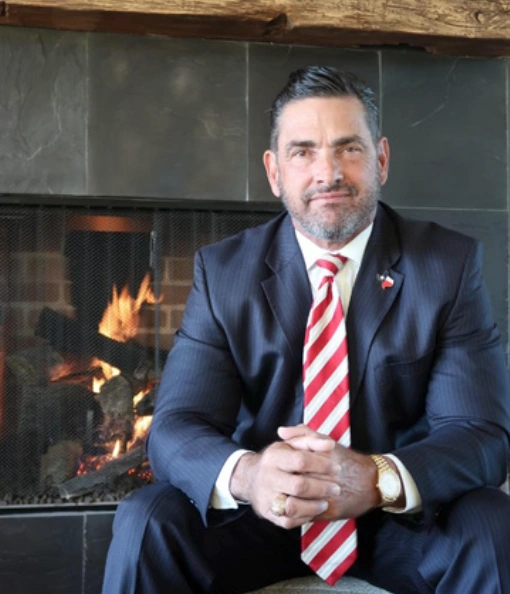
Sam R. Cammack III is a highly experienced criminal defense lawyer and former prosecutor serving the Houston area with over 20 years of legal expertise. Dedicated to protecting his clients’ rights, he has successfully defended cases ranging from misdemeanors to serious felonies.
Sam received his Bachelor’s Degree in Psychology with honors from the University of Houston and graduated Magna Cum Laude with a Doctorate of Jurisprudence. A standout legal scholar, he finished first in his class in eleven different areas of law, received the prestigious Prima Excellencia award, and interned at the 14th Court of Appeals with Justice Eva Guzman. Known for his sharp analytical skills and strategic defense, he remains steadfast in his pursuit of justice for every client.