
Quick Answer
If you are accused of a crime in Houston, you have more than the right to remain silent. You have the right to counsel, to refuse consent to a search, to see a magistrate within roughly 48 hours, to reasonable bail, to confront witnesses, and — under the Texas Michael Morton Act — to receive the State’s evidence on request. But rights are not self-executing. Nobody files a motion or requests discovery on your behalf unless an attorney does it.
Silence Only Protects You If You Claim It
“I am invoking my right to remain silent. I want a lawyer. I do not consent to any searches.”
Just staying quiet does not invoke anything — police may keep questioning until you say it out loud.
Key Takeaways
| The “one phone call” is a myth. Texas does not limit you to a single call. Access varies by facility, but the standard is reasonable access — ask again if the first call fails. | |
| The State does not have to prove motive. Motive is not an element of any offense. What must be proven is each statutory element, beyond a reasonable doubt. | |
| You have a right to the State’s evidence. The Michael Morton Act requires prosecutors to produce offense reports, witness statements, and more — but only on a timely request from your attorney. | |
| Bail secures appearance, not punishment. Texas guarantees most offenses are bailable and prohibits excessive bail. People held pretrial plead guilty at higher rates — release protects your ability to fight. | |
| Which right matters most depends on the charge. Drug cases turn on the Fourth Amendment. DWI turns on how the specimen was obtained. Assault turns on self-defense law. | |
| Rights are tools, not guarantees. No motion gets filed, no discovery gets requested, and no expert gets challenged unless someone does it on your behalf. |
This content is general information about Texas and federal law, not legal advice. Past results do not guarantee a similar outcome.
You May Have More Rights Than You Think
You may have more rights than you think when someone accuses you of a crime. This is why it is crucial that you call Houston criminal attorneys right away. A loved one can make the call, or you can use the phone access you are given as the opportunity to call for legal representation. You need to find a lawyer with the specialty in the particular crime someone accused you of as well as find one that you can trust. This may take a few interviews. But you have the right to interview several before you find one that you want to work with.
A quick myth to clear up: the “one phone call” is television, not law. Texas does not limit you to a single call. Jails have their own procedures, and access varies by facility, but the rule is reasonable access — not one and done. If your first call does not reach an attorney, ask to try again.
Your Rights, Specifically
Most people know they have “the right to remain silent” and little else. Here is the fuller list.
Before and during questioning
- The right to remain silent. You never have to answer questions about what happened.
- The right to an attorney — before questioning and during it. If you cannot afford one, the court appoints counsel.
- The right to refuse consent to a search. Officers frequently ask for consent precisely because they lack probable cause for a warrant. Declining is not evidence of guilt.
- The right to know what you are charged with.
In custody
- The right to be brought before a magistrate without unnecessary delay — generally within 48 hours in Texas. At this Article 15.17 hearing you are told the charges, given statutory warnings, and bail is set.
- The right to reasonable bail. The Texas Constitution guarantees that most offenses are bailable and prohibits excessive bail. Bail is meant to secure your appearance, not to punish you before trial.
- The right to consult with your attorney privately. Attorney calls are privileged. Ordinary jail calls are not.
At trial
- The presumption of innocence. The State must prove every element beyond a reasonable doubt.
- The right not to testify — and the jury is instructed it cannot hold your silence against you.
- The right to a speedy, public jury trial.
- The right to confront and cross-examine the witnesses against you.
- The right to compel witnesses to appear on your behalf.
- The right against double jeopardy.
- The right to an interpreter if you do not speak English.
- The right to appeal.
The Right to Evidence: Texas Goes Further
Here is a right most people have never heard of, and it matters enormously.
Under Brady v. Maryland, prosecutors have a constitutional duty to disclose evidence favorable to the defense. But Texas added something stronger. The Michael Morton Act, codified at Article 39.14 of the Texas Code of Criminal Procedure, requires the State to produce offense reports, witness statements, and other evidence in its possession upon a timely request from the defense.
The statute is named for a man who served nearly 25 years in a Texas prison for a murder he did not commit, in a case where favorable evidence was not turned over. The law passed in response is one of the broader criminal discovery statutes in the country.
This is a right that only works if someone exercises it. Evidence does not arrive on its own — an attorney has to request it, review it, and follow up on what is missing.
Silence Only Protects You If You Claim It
There are many police stations and detectives that will try to get you to say more than you should before you have an attorney present. While these tactics are not illegal, they are usually not helpful to your case, either. Your Houston criminal attorneys can advise you on what questions you should and should not answer. The right to a lawyer is part of your Miranda rights. You should take advantage of them at the first chance that you get.
One critical caveat, because it is where people lose the protection they thought they had: simply staying quiet is not enough. In Berghuis v. Thompkins, the Supreme Court held that silence alone does not invoke the right to remain silent. Officers may keep questioning, and one answer given hours into that silence is admissible.
You have to say it out loud, and clearly:
“I am invoking my right to remain silent. I want a lawyer. I do not consent to any searches.”
An ambiguous version does not work either. Under Davis v. United States, “maybe I should talk to a lawyer” has been held insufficient to require police to stop.
And once you invoke, stop. Police must cease questioning — unless you restart the conversation yourself.
Accusation Is Not Conviction
Just because someone accuses you of a crime does not mean that you will see jail time. The law requires probable cause to arrest and hold you — a reasonable basis, supported by facts, to believe an offense was committed and that you committed it. When you involve Houston criminal attorneys immediately, they can advocate for your release, argue for a lower bail amount, and work toward the best available outcome — whether or not you committed the offense. Either way, you still have rights and a good attorney will help you assert them.
One clarification worth making, because it is commonly misunderstood: the State does not have to prove motive. Motive is not an element of any offense. Prosecutors often present one because juries find it persuasive, but a case does not fail for lack of it. What the State must prove is each statutory element of the charged offense, beyond a reasonable doubt.
Bail: What It Is and Is Not
Bail exists to secure your appearance in court, not to punish you in advance. The Texas Constitution makes most offenses bailable and prohibits excessive bail.
Why the amount matters so much: people held before trial resolve their cases by plea at higher rates than people who fight from home. That is not a coincidence. In custody you lose your job, fall behind on rent, and cannot help gather evidence for your own defense. A plea that ends the detention starts to look reasonable even when the case is weak.
An attorney who appears at the bond hearing prepared — with employment records, community ties, and a concrete release plan — is protecting your ability to fight the case at all.
Specialty Matters When Learning Your Rights
Houston criminal attorneys are not all equal, so when you really want to learn your rights, hire the right attorney. Every lawyer has their specialty, even within criminal law. Some attorneys focus on murder or sex crimes while others focus on drug possession or grand theft. When you choose a lawyer that has the same specialty as the crime you have been charged with, it’s easier to learn your rights, because they are well-versed within the law as well as previous cases — all of which can help you pursue a “not guilty” verdict from a jury, or a reduced sentence if you are found guilty.
The reason specialization matters here is that rights are charge-specific in practice. In a drug case, your most valuable right is the Fourth Amendment protection against unreasonable search and seizure. In a DWI case, it is the ability to challenge how a breath or blood specimen was obtained and analyzed. In an assault case, it is Chapter 9 self-defense law. Same constitution, entirely different leverage.
An attorney who works your charge area knows which of your rights actually has teeth in your situation.
A Fair Fight Requires Someone in Your Corner
Courtrooms are for justice, as well as equality. There is a prosecutor and a defendant. They are the two halves that balance out the justice system. You have the right to a fair trial and defense, which is why Houston criminal attorneys exist in the first place. When someone is accused of a crime, you need an aggressive attorney. You need an attorney that will not only help you to learn your rights but to defend them in the courtroom tooth and nail if necessary.
Be clear-eyed about the balance, though. On one side is the Harris County District Attorney’s Office, with investigators, crime lab access, and full police cooperation. On the other side is you — and whatever your attorney chooses to put into the case.
Rights are not self-executing. Nobody files a suppression motion on your behalf automatically. Nobody requests discovery under the Michael Morton Act unless someone asks. Nobody challenges the state’s expert unless your lawyer has an expert of their own. The constitutional guarantees are real, but they are tools, and tools require someone willing to pick them up.
Contact us for a free consultation.
Frequently Asked Questions
What rights do I have after being arrested in Texas?
Do I really only get one phone call?
What is the Michael Morton Act and why does it matter to me?
Does the prosecutor have to prove I had a motive?
Is staying quiet enough to protect my right to remain silent?
What is bail actually for, and can it be lowered?
Can I interview more than one attorney before choosing?
If I have these rights, why do I still need a lawyer?
Knowing your rights is the first step. Having someone assert them is the one that counts.
Get a Free ConsultationThis content is general information about Texas and federal law, not legal advice. Past results do not guarantee a similar outcome.
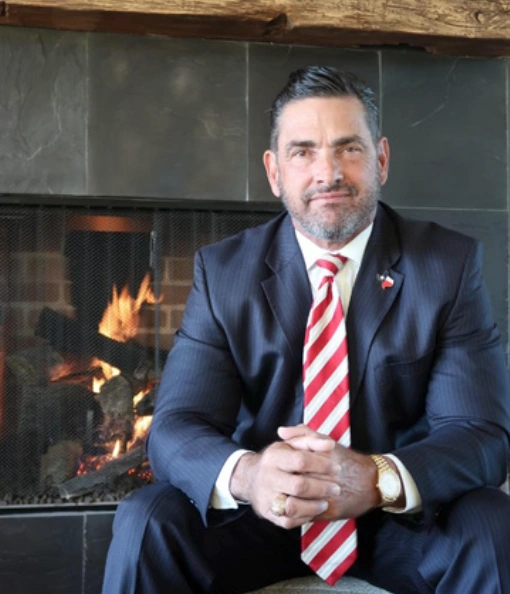
Sam R. Cammack III is a highly experienced criminal defense lawyer and former prosecutor serving the Houston area with over 20 years of legal expertise. Dedicated to protecting his clients’ rights, he has successfully defended cases ranging from misdemeanors to serious felonies.
Sam received his Bachelor’s Degree in Psychology with honors from the University of Houston and graduated Magna Cum Laude with a Doctorate of Jurisprudence. A standout legal scholar, he finished first in his class in eleven different areas of law, received the prestigious Prima Excellencia award, and interned at the 14th Court of Appeals with Justice Eva Guzman. Known for his sharp analytical skills and strategic defense, he remains steadfast in his pursuit of justice for every client.