
Quick Answer
Police must read Miranda warnings only when both prongs are met: you are in custody, and you are being interrogated. A roadside DWI question is interrogation but not custody, so no warning is required. Sitting silently in a patrol car is custody but not interrogation, so again none is required. And a Miranda violation does not dismiss your case — it suppresses the statement. In Texas, Article 38.22 adds stricter recording requirements than federal law.
The Two-Prong Test — Both Must Be Present
| 1 | Custody — you are not free to leave. An ordinary traffic stop does not count. |
| 2 | Interrogation — questioning, or words and actions police should know are likely to draw an incriminating response. |
Say This, Word for Word
“I am invoking my right to remain silent. I want a lawyer. I do not consent to any searches.”
Then stop. Once you invoke, police must stop questioning — but only until you restart the conversation.
Key Takeaways
| A Miranda violation does not dismiss your case. The remedy is suppression of the statement. Physical evidence, video, and witness testimony all survive. | |
| Texas is stricter than federal law. Under Article 38.22, an oral custodial statement is generally inadmissible unless it was electronically recorded, with the warnings given on the recording. | |
| Texas requires a fifth warning. Beyond the federal four, Article 38.22 requires telling you that you may terminate the interview at any time. | |
| Volunteered statements are never protected. If nobody questioned you, there was no interrogation. Talking to fill the silence in a patrol car is fully admissible. | |
| Silence does not invoke your rights. You have to say it out loud, and clearly. “Maybe I should get a lawyer” has been held insufficient to stop questioning. | |
| Miranda covers words, not physical evidence. Field sobriety tests, breath and blood samples, fingerprints, and lineups fall outside it entirely. |
This content is general information about Texas and federal law, not legal advice. Past results do not guarantee a similar outcome.
Understanding Miranda Rights: The Two-Prong Test
The United States Supreme Court says that Miranda applies under a two-prong test across the nation, including here in Houston. This is the two-prong test.
- The citizen or the individual has to be in custody;
- The law enforcement official has to be asking questions that would elicit an incriminating response.
Both prongs must be present. If either one is missing, no warning is required — and this is where nearly every misunderstanding about Miranda begins.
The DWI Stop: A Textbook Example
For instance, during a DWI investigation, the police officer walks up to the window and asks, “Sir, or madame, have you been drinking tonight?” Obviously, that would elicit an incriminating response. “Yes, Sir I have, I have had three beers.”
That satisfies the second prong. But not the first. In Berkemer v. McCarty, the Supreme Court held that an ordinary traffic stop does not place a driver in custody for Miranda purposes. The stop is brief, it happens in public, and it is not the coercive environment Miranda was designed to address.
So the officer does not have to warn you — and your answer comes in as evidence.
One clarification worth making. Your Fifth Amendment privilege against self-incrimination does not disappear during a roadside stop. What is absent is the requirement that police warn you about it. The right still exists; nobody is obligated to remind you it does. You may simply decline to answer.
That’s when you should say, “Officer, I do not want to speak with you without talking to an attorney first.”
Stay calm and polite. You must provide your driver’s license and insurance when asked. You do not have to explain where you have been, what you have had to drink, or where you are going.
Custody Without Questioning
On the way to the police station, if the officer does not ask you any questions — and obviously you are in custody if you are in their trooper’s car — Miranda still does not apply. It is because it does not meet the two-prong test. He or she is not asking you any questions that would elicit an incriminating response. Therefore, in this case, they would not need to read your Miranda rights or provide you with a Miranda warning.
You have to meet both prongs under the Supreme Court’s test. Again: 1) you need to be in custody and 2) the officer is questioning you in a manner attempting to elicit an incriminating response.
This scenario produces one of the most damaging patterns in criminal cases. The back of a patrol car is quiet and the silence feels heavy. People start talking to fill it. Nothing they say is protected, because nobody asked them anything — volunteered statements are not the product of interrogation, so Miranda does not apply to them at all.
Assume the car is recorded. It usually is.
What Counts as “Interrogation”
The second prong is broader than direct questions. In Rhode Island v. Innis, the Supreme Court defined interrogation as express questioning or its functional equivalent — any words or actions by police that they should know are reasonably likely to elicit an incriminating response.
That means officers cannot evade Miranda simply by avoiding question marks. A staged conversation between two officers designed for a suspect to overhear can qualify. Comments engineered to provoke a reaction can qualify.
Two well-established exceptions:
- Booking questions. Routine biographical questions during intake — name, address, date of birth — are generally exempt under Pennsylvania v. Muniz.
- Public safety. Under New York v. Quarles, officers may ask questions reasonably prompted by an immediate safety concern, such as the location of a weapon, before any warning is given.
What a Miranda Violation Actually Does
This is the most widespread misconception in criminal law, and it is worth being direct about.
A Miranda violation does not get your case dismissed.
The remedy is suppression — the statement obtained in violation cannot be used against you in the prosecution’s case-in-chief. Everything else in the case survives. Physical evidence, witness testimony, video, forensic results: all of it remains.
Three further limits worth knowing:
- A suppressed statement may still be usable to impeach you if you testify at trial and say something inconsistent.
- Under Vega v. Tekoh, a Miranda violation alone does not support a federal civil rights damages claim.
- Miranda does not apply to questioning by someone the suspect does not know is law enforcement. Under Illinois v. Perkins, statements to an undercover officer or informant in jail are not custodial interrogation.
Suppression is still enormously valuable. In many cases the defendant’s own statement is the strongest evidence the State has, and losing it changes the entire posture of a case. But dismissal is a separate question that depends on what remains.
Texas Goes Further Than Federal Law
Here is what many discussions of Miranda leave out, and it matters considerably in Houston cases.
Texas Code of Criminal Procedure Article 38.22 imposes stricter requirements than federal Miranda.
Under Article 38.22, an oral statement made during custodial interrogation is generally not admissible against the accused unless:
- An electronic recording was made of the statement;
- The warnings were given on the recording, before the statement;
- The accused knowingly, intelligently, and voluntarily waived those rights;
- The recording device was capable of making an accurate recording and the operator was competent;
- All voices on the recording are identified; and
- The defense attorney is provided a complete, accurate copy of all recordings not later than the 20th day before the proceeding.
Article 38.22 also requires a fifth warning that federal Miranda does not: that the accused has the right to terminate the interview at any time.
The practical consequence is significant. An unrecorded oral custodial statement is frequently inadmissible in Texas even where federal Miranda would have permitted it. This is a genuine, statute-based suppression avenue that a defense attorney who works Texas criminal cases will examine in every case involving a statement.
Recordings must also be preserved until the conviction is final and all direct appeals are exhausted, or until prosecution is barred.
Invoking Your Rights: Say It Clearly
Having rights and successfully invoking them are two different things.
Silence alone does not invoke anything. In Berghuis v. Thompkins, the Supreme Court held that remaining quiet does not invoke the right to remain silent. Officers may continue questioning, and a single answer given hours into that silence is admissible.
Ambiguity does not invoke anything either. Under Davis v. United States, police need not stop questioning over an equivocal request. Courts have found phrasing like “maybe I should talk to a lawyer” insufficient.
Say it plainly:
“I am invoking my right to remain silent. I want a lawyer. I do not consent to any searches.”
Once you clearly request counsel, Edwards v. Arizona requires officers to stop interrogation until a lawyer is present — unless you reinitiate the conversation yourself. That last clause undoes more invocations than anything else. After invoking, do not explain, do not clarify, do not restart.
What Miranda Does Not Cover
Miranda protects testimonial communication. It does not apply to physical or non-testimonial evidence, including:
- Standardized field sobriety tests
- Breath and blood specimens
- Fingerprints, handwriting exemplars, voice exemplars
- Standing in a lineup
Refusing chemical testing in Texas carries its own consequences under implied consent law, which is a separate analysis from Miranda entirely.
If You Have Already Given a Statement
Do not assume the case is over. Whether a statement is admissible turns on facts a defense attorney has to develop: Were you actually in custody under the objective circumstances? Was there interrogation, or something functionally equivalent? Was it recorded as Article 38.22 requires? Were all five Texas warnings given on the recording? Was the waiver knowing, intelligent, and voluntary?
Those questions get answered by reviewing the recording, the report, and the timeline — not by assuming.
If you need legal advice, contact us for a free consultation.
Frequently Asked Questions
Will my case be dismissed if police never read me my Miranda rights?
Do police have to read Miranda rights during a traffic stop?
What counts as “interrogation” under Miranda?
How is Texas law stricter than federal Miranda?
Are statements I volunteer without being asked protected?
How do I properly invoke my Miranda rights?
Does Miranda apply to field sobriety tests or a breath sample?
I already gave a statement. Is there anything that can be done?
Gave a statement to police? Whether it can be used against you is a question worth answering properly.
Get a Free ConsultationThis content is general information about Texas and federal law, not legal advice. Past results do not guarantee a similar outcome.
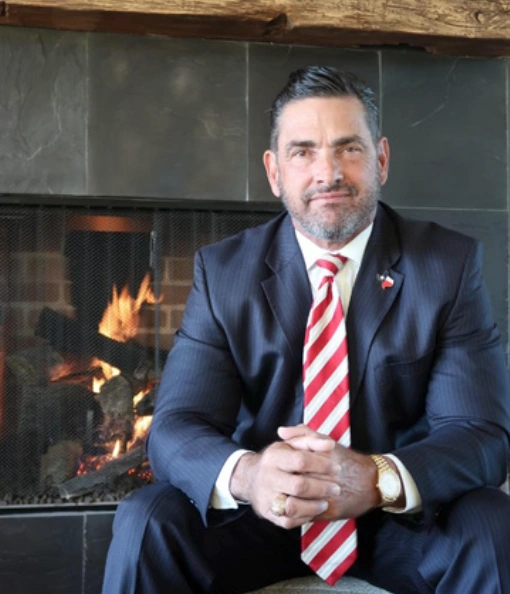
Sam R. Cammack III is a highly experienced criminal defense lawyer and former prosecutor serving the Houston area with over 20 years of legal expertise. Dedicated to protecting his clients’ rights, he has successfully defended cases ranging from misdemeanors to serious felonies.
Sam received his Bachelor’s Degree in Psychology with honors from the University of Houston and graduated Magna Cum Laude with a Doctorate of Jurisprudence. A standout legal scholar, he finished first in his class in eleven different areas of law, received the prestigious Prima Excellencia award, and interned at the 14th Court of Appeals with Justice Eva Guzman. Known for his sharp analytical skills and strategic defense, he remains steadfast in his pursuit of justice for every client.