
By counsel · Harris County · civil rights & the criminal docket
I represented Charnesia Corley after Harris County deputies searched her body in a parking lot
I was her lawyer. This was a Harris County Sheriff’s Office stop in Houston, not a small marijuana case with an ugly search attached. The search was the case: a Fourth Amendment and Texas search-and-seizure problem that happened to be charged as misdemeanor possession and resisting. Once we treated it that way (report, dashcam, public record), the Harris County District Attorney’s Office dropped the misdemeanors they had hung on her. That is the result I will describe. It is her result, not a coupon for the next person who calls from Houston, Pasadena, Baytown, or anywhere else in this county.
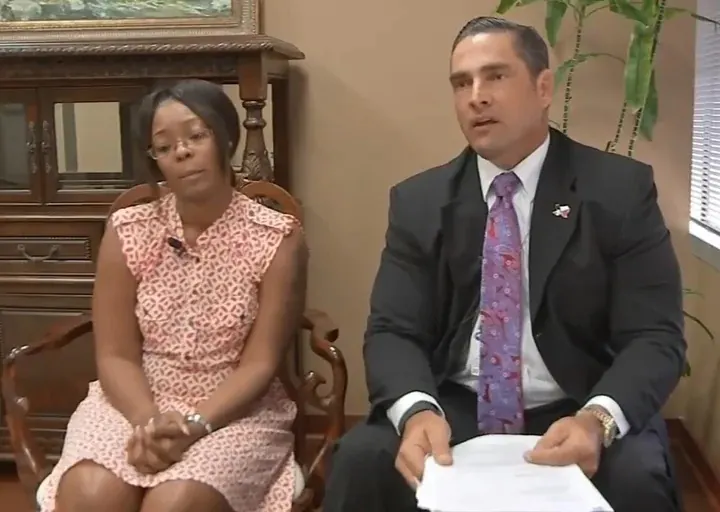
They labeled her. I started with the Constitution.
I spent years as a prosecutor. I know how a stop gets written up so the person in the car becomes the problem. Charnesia was 21. She told David Lohr at HuffPost she was running an errand for her sick mother. A Harris County deputy accused her of a stop sign, said he smelled marijuana, and searched the car. Then they called a female deputy and took the search into her body, in a Texaco lot, with people walking and driving past.
She told HuffPost, “They sexually assaulted, raped me and molested me.” I believed her. My job was to make the file believe her too.
The office tried to sell consent. Spokesman Thomas Gilleland told KTRK a deputy wrote that she consented, and that they found no marijuana in the vehicle. I had the offense report. I told HuffPost he “completely lied” about consent. The report described her trying to stop them. That is why they charged resisting. There was nothing in that report that said she agreed to a cavity search in a parking lot.
Texas treats a manual cavity search as one of the most intrusive acts the State can do to a person. I said then, and I will say now, the Court of Criminal Appeals in McGee v. State, 105 S.W.3d 609 (Tex. Crim. App. 2003) put that kind of intrusion on a ladder: strip search, visual body-cavity search, then manual body-cavity search, which means probing or touching a cavity. McGee was a visual search at a fire station, with no penetration. The Court agreed the search belongs in a hygienic setting. It said a fire station “was not as sterile an environment as a hospital,” and allowed less only because there was no penetration of the body. Charnesia’s search, as she and I described it on the record, was manual, in a Texaco lot, in public. That is not McGee’s fire station. If you skip the place, the manner, and the justification the Supreme Court required in Bell v. Wolfish, 441 U.S. 520 (1979), you are not “investigating marijuana.” You are violating her.
The letter of the law: criminal and civil
The federal floor is the Fourth Amendment: the right of the people to be secure in their persons against unreasonable searches. Texas says the same thing in its own words. Texas Constitution article I, section 9: the people shall be secure in their persons from all unreasonable seizures or searches, and no warrant issues without probable cause. I do not pick one and ignore the other. A Harris County stop has to survive both.
On the criminal docket, Texas also has an exclusionary statute the federal courts do not copy. Code of Criminal Procedure article 38.23 bars evidence obtained in violation of the United States Constitution, the Texas Constitution, or Texas statutes. That is how a cavity search becomes the whole case: if the search falls, the possession case that was built on it falls with it.
What they charged her with, as HuffPost reported, was not mysterious:
Possession of marihuana. Health and Safety Code § 481.121. Two ounces or less is a Class B misdemeanor. Investigators said 0.02 ounces. That is a Harris County Criminal Court at Law case at the Criminal Justice Center, 1201 Franklin Street, Houston, not a district-court felony. I defend narcotics and drug-possession cases in that building. This one was still a search case wearing a drug label.
Resisting arrest, search, or transportation. Penal Code § 38.03. Class A misdemeanor unless a deadly weapon is used. Read subsection (b) before you get clever: it is no defense to resisting that the arrest or search was unlawful. That is why you do not beat this charge by yelling “illegal search” at the magistrate and going home. You still attack the search for the possession file under article 38.23, and you still put her civil rights in the same folder. The resisting count was how they wrote her trying to stop them. I told HuffPost the report did not describe consent.
The deputies’ track, when the State later charged two of them, was Penal Code § 39.03, official oppression: a public servant, under color of office, intentionally subjecting someone to a search he knows is unlawful, or denying a right, or sexual harassment as that statute defines it. HuffPost reported those charges were dropped. I still name the statute. Naming it is not a conviction.
Civil rights are a different courthouse. 42 U.S.C. § 1983 is the federal statute that lets a person sue someone who, under color of state law, deprives them of a constitutional right. The Fourth Amendment is the right. The Southern District of Texas in Houston is where those complaints are often filed; HuffPost reported a civil lawsuit against the Sheriff’s Office. I will not invent a judgment, a settlement, or a dollar figure. The letter of that law is liability for the deprivation. The letter of the criminal law on this page is that her misdemeanors were dismissed.
Bodily intrusion is not a Harris County invention. The Supreme Court in Schmerber v. California, 384 U.S. 757 (1966) allowed a blood draw only under tight limits, in a medical setting. In Winston v. Lee, 470 U.S. 753 (1985) it refused surgery to dig evidence out of a body. I try Houston DWI cases in the same Franklin building; those files now run through blood-draw warrants under Chapter 18 as well. Charnesia’s case was not a DWI. It was the same question in a parking lot: how far into a person’s body may the State go on a roadside stop, and where.
After her stop, Texas put the roadside rule in black letter. Code of Criminal Procedure article 18.24, added by House Bill 324, 84th Legislature, says a peace officer may not conduct a body-cavity search during a traffic stop unless the officer first obtains a Chapter 18 search warrant. The article defines a body-cavity search as an inspection of a person’s anal or vaginal cavity in any manner, not a pat-down. That statute took effect 1 September 2015. Her stop was 21 June 2015. I will not pretend article 18.24 was already in force that night. I will tell you the Legislature had already passed it, the Governor signed it on 19 June, and Texas later wrote into the Code what we were already arguing from the Constitution and McGee: you do not do this on the side of a Houston road without a warrant.
The strategy was her rights, not a plea on 0.02 ounces
A court-appointed lawyer under pressure would have been told this was a pair of misdemeanors: take the deal, move on. I do not practice that way. The founding idea of this job, as I have said on our firm page, is a hard fight, a counterweight, not convenience.
So the plan had two tracks that had to move together:
Criminal docket. Kill the possession and resisting cases by attacking the search under article 38.23, the Fourth Amendment, and article I, section 9. If the search is unlawful, the story that she “resisted” a sexual intrusion in public does not get to sit on her record as a Harris County conviction. HuffPost later reported, citing the Houston Chronicle, that I said there was no marijuana, and that the District Attorney’s Office dropped her misdemeanor charges. That is the criminal result in Houston. Past results do not guarantee future outcomes.
Civil rights. Internal Affairs. A civil lawsuit HuffPost described as multi-million-dollar against the Harris County Sheriff’s Office (the § 1983 track). And the dashcam. I released that video because a paper denial is easy; eleven minutes of what I told Fox 26 was a public cavity search is not. Charnesia is on the recording: “That was extreme, to pull my clothes down, in front of people. People were watching.” I told KTRK the community would be outraged. I wanted Harris County to have to watch what it did.
That is how you put her civil rights on the same table as the charge. You refuse to let the State shrink it to a baggie. When we did that, her criminal cases ended. That is justice for her on the docket I was hired to fight: she was not left under those misdemeanors. I will not dress it up as a conviction of the deputies. HuffPost reported official-oppression charges against two of them were dropped. Our earlier post named a second grand jury that no-billed. I called for a special prosecutor. The system can fail one track and still have to let her go on the other. Both of those facts can be true.
Prosecutor Natasha Sinclair told Fox 26 her office did not condone how the search was done, that it should not have happened, and that they still would not call it a criminal act by the deputies. That is the tension I used to live on the other side of the table. I do not condone it either. They dropped her cases. That is the result I will own on this page.
Why this URL exists
I put the video on this website. HuffPost’s follow-up, Jezebel, The Root, Business Insider, and Nofi pointed readers here. For years the address returned 404. That was a mistake. This is my account, on the slug they already use. An older post, Seeking Justice for Charnesia Corley, should redirect here once this page is live so we stop splitting her story across two URLs.
I do not put this matter on case results. Barajas is a jury verdict. This is a woman whose body was searched in public, whose misdemeanors were dismissed after we made the search the issue, and whose civil file I will not fictionalize.
If this is you
Do not argue the search in the lot. Do not post the video until a lawyer has it. Call me. We start with the offense report and the camera, not with a plea on a Class B in a Houston Criminal Court at Law. Harris County misdemeanors and felonies are heard at 1201 Franklin. People call from Houston, Pasadena, Baytown, Katy, Humble, and Cypress; the court that matters is the county that filed the case. The same search-and-seizure fight shows up in drug possession, DWI blood draws, and roadside stops that get charged as resisting. This office is on the Loop: contact, Harris County, jail and clerk lookups. 713-224-4444.
Questions I get
Is this a guaranteed result?
No. It is what happened in Charnesia’s Harris County criminal case as reported: the DA dropped the misdemeanors after we made the search the issue. Your facts will be different.
Did the deputies go to prison?
No. Official-oppression charges under Penal Code § 39.03 were dropped, as HuffPost reported. I still say the search was wrong. Those two sentences belong together.
Did article 18.24 already ban this in June 2015?
No. House Bill 324 took effect 1 September 2015. Her stop was 21 June. The Constitution, article I, section 9, McGee, and article 38.23 were already the law. Article 18.24 is what Texas wrote afterward: no body-cavity search during a traffic stop without a warrant.
Why two spellings of her name?
HuffPost used Charnesia in 2015 and Charneisha later. I use Charnesia Corley.
Was this a marijuana case?
No. The search was the case. § 481.121 and § 38.03 were what they charged after they did it. I treated her Fourth Amendment rights as the work, not a plea on 0.02 ounces in a Houston misdemeanor court.
Why does Texas put this search in a hospital?
Because McGee classified a manual cavity search as more intrusive than a visual one, agreed the setting must be hygienic, and said a fire station was “not as sterile as a hospital.” That lesser setting was allowed only because there was no penetration. I told HuffPost a manual cavity search belongs in a hospital, a sterile environment, not a parking lot. Schmerber and Winston are the Supreme Court cases on putting the State inside a body.
How do I reach you?
Call 713-224-4444 or use the contact form. The office is 1001 West Loop South, Suite 700, Houston, TX 77027. Harris County cases: 1201 Franklin.
Press I cite (open these)
These are the original articles. I link out to them. Several of them already link in to this URL. That is why the permalink must stay /body-cavity-search/.
- HuffPost: Woman Says Gas Station Strip Search Was Like Sexual Assault 10 Aug 2015 · David Lohr · links our homepage · names Samuel Cammack III
-
HuffPost: Dashcam Video Shows Cops Searching Woman’s Vagina For 11 Minutes, Lawyer Says
Follow-up · cites
/body-cavity-search - Jezebel: Dashcam Footage Shows Police Subjecting Woman to Invasive Vaginal Search Cites this slug · “website of Corley’s attorney, Sam R. Cammack”
- The Root: #CopsToo Cites this slug · second Root URL: older slug
- Business Insider: roadside strip-search suit Cites this slug · nofollow on their side
- Nofi: Charneisha Corley (French) Cites this slug
- Leafbuyer: charges dropped (cannabis search) Links our homepage, not this slug
- Petition: Care2 / ThePetitionSite Advocacy petition linked from the older firm post · not a court result
Law I cite (open these)
These are the statutes and opinions named in the article. They are the letter of the law, not a result in anyone else’s case.
- U.S. Const. amend. IV Persons secure against unreasonable searches
- Tex. Const. art. I, § 9 Texas Bill of Rights: searches and seizures
- McGee v. State, 105 S.W.3d 609 (Tex. Crim. App. 2003) Strip / visual / manual cavity search; hygienic setting; hospital vs fire station
- Bell v. Wolfish, 441 U.S. 520 (1979) Scope, manner, justification, and place of the search
- Schmerber v. California, 384 U.S. 757 (1966) Bodily intrusion; medical setting for a blood draw
- Winston v. Lee, 470 U.S. 753 (1985) Compelled surgery to recover evidence: unreasonable search
- Tex. Code Crim. Proc. art. 38.23 Texas exclusionary rule
- Tex. Code Crim. Proc. art. 18.24 Body-cavity search during a traffic stop requires a warrant · effective 1 Sept 2015 · H.B. 324
- Tex. Health & Safety Code § 481.121 Possession of marihuana · two ounces or less is a Class B misdemeanor
- Tex. Penal Code § 38.03 Resisting arrest, search, or transportation · unlawful search is no defense
- Tex. Penal Code § 39.03 Official oppression · not a conviction on this page
- 42 U.S.C. § 1983 Civil action for deprivation of rights under color of state law
On this site
Sam R. Cammack III, Your Houston Criminal Lawyers ·
1001 West Loop South, Suite 700, Houston, TX 77027 ·
713-224-4444
Photo credit: ABC13 Houston.
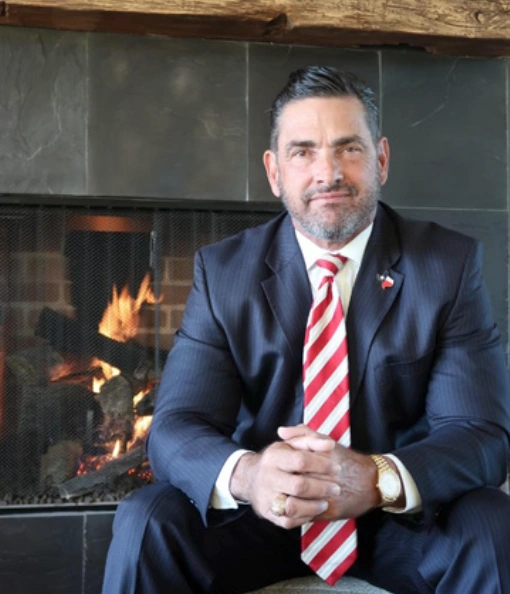
Sam R. Cammack III is a highly experienced criminal defense lawyer and former prosecutor serving the Houston area with over 20 years of legal expertise. Dedicated to protecting his clients’ rights, he has successfully defended cases ranging from misdemeanors to serious felonies.
Sam received his Bachelor’s Degree in Psychology with honors from the University of Houston and graduated Magna Cum Laude with a Doctorate of Jurisprudence. A standout legal scholar, he finished first in his class in eleven different areas of law, received the prestigious Prima Excellencia award, and interned at the 14th Court of Appeals with Justice Eva Guzman. Known for his sharp analytical skills and strategic defense, he remains steadfast in his pursuit of justice for every client.