
Quick Answer
Texas has no “first-degree” or “second-degree” murder. Chapter 19 sets out four homicide offenses — capital murder, murder, manslaughter, and criminally negligent homicide — separated by mental state. Premeditation is not an element of any of them, and “malice aforethought” is common-law language Texas abandoned. Assault runs a separate ladder, from a fine-only Class C up to a first-degree felony.
The Actual Texas Homicide Ladder
|
Capital murder § 19.03 Death, or life without parole |
|
Murder § 19.02 — intentional or knowing 5 to 99 years or life — reduced to 2 to 20 if sudden passion is proven |
|
Manslaughter § 19.04 — reckless 2 to 20 years |
|
Criminally negligent homicide § 19.05 180 days to 2 years state jail |
Mental state is the dividing line — intentional, knowing, reckless, or criminally negligent. That single element separates a potential life sentence from a state jail felony.
Key Takeaways
| Sudden passion can halve the exposure. Proven at the punishment stage, it reduces murder from a first-degree felony to a second-degree — from 5–99 years down to 2–20. | |
| Felony murder requires no intent to kill. Committing a felony and causing death through an act clearly dangerous to human life is murder under § 19.02. | |
| The death penalty applies only to capital murder. Murder under § 19.02 does not carry it. Where the State does not seek death, capital murder means automatic life without parole. | |
| Not all assault is a Class A. Assault by threat or offensive contact is a fine-only Class C. The Class A level requires bodily injury — and physical pain alone qualifies. | |
| Exhibiting a weapon is enough. Aggravated assault requires serious bodily injury or the use or exhibition of a deadly weapon. It need not be used. | |
| Chapter 9 self-defense applies to homicide too. Texas law on justified force is comparatively favorable to defendants and reaches these charges, not only assault. |
This content is general information about Texas law, not legal advice. Penalty ranges are subject to enhancement and legislative change.
Two of the Most Serious Charges in Texas Law
Murder and assault sit at opposite ends of the same statutory territory in criminal law — offenses against the person. Both carry consequences that reshape a life. But the way Texas actually classifies them differs substantially from how these crimes are described in popular culture and in most online summaries.
Getting the classification right matters, because the difference between two adjacent offenses in Chapter 19 can be measured in decades.
Texas Does Not Have “First-Degree” or “Second-Degree” Murder
This is the correction that matters most, and nearly every general-audience article gets it wrong.
Many states divide homicide into first- and second-degree murder. Texas does not. Searching for “second-degree murder Texas” returns law from other jurisdictions that does not apply here.
Texas Chapter 19 sets out four criminal homicide offenses:
| Offense | Statute | Classification | Punishment range |
|---|---|---|---|
| Capital murder | § 19.03 | Capital felony | Death, or life without parole |
| Murder | § 19.02 | First-degree felony | 5 – 99 years or life, $10,000 fine |
| Manslaughter | § 19.04 | Second-degree felony | 2 – 20 years, $10,000 fine |
| Criminally negligent homicide | § 19.05 | State jail felony | 180 days – 2 years, $10,000 fine |
The distinction between them is the defendant’s mental state — intentional or knowing, versus reckless, versus criminally negligent. That single element separates a potential life sentence from a state jail felony.
Murder — Texas Penal Code § 19.02
“Malice aforethought” is not the Texas standard. That is common-law language Texas abandoned when it adopted its modern Penal Code. Neither is premeditation an element — a point worth emphasizing, because the popular assumption that murder requires planning is simply not how the statute works.
Section 19.02 reaches three distinct fact patterns:
- Intentional or knowing killing — intentionally or knowingly causing the death of an individual.
- Intent to cause serious bodily injury — intending serious bodily injury and committing an act clearly dangerous to human life that causes death. No intent to kill required.
- Felony murder — committing or attempting a felony other than manslaughter and, in the course of it, committing an act clearly dangerous to human life that causes death. This is the provision most people have never heard of and it is broad.
Murder is a first-degree felony: 5 to 99 years or life.
Sudden passion can reduce it. At the punishment stage, a defendant may raise whether the death was caused under the immediate influence of sudden passion arising from an adequate cause. If proven by a preponderance of the evidence, the offense becomes a second-degree felony — 2 to 20 years instead of 5 to 99. This is one of the most consequential punishment-phase issues in Texas homicide practice, and it is raised at punishment rather than guilt.
Capital Murder — Texas Penal Code § 19.03
Capital murder is an intentional or knowing killing under § 19.02(b)(1) plus one of the aggravating circumstances the statute enumerates, including:
- Murder of a peace officer or firefighter acting in the line of duty, where the actor knows their status
- Murder committed in the course of kidnapping, burglary, robbery, aggravated sexual assault, arson, obstruction or retaliation, or certain terroristic threats
- Murder for remuneration, or employing another to commit murder
- Murder while escaping or attempting to escape a penal institution
- Murder of more than one person during the same criminal transaction, or during different transactions pursuant to the same scheme
- Murder of a child under 10
- Murder of a child at least 10 but younger than 15 — a provision added more recently, carrying mandatory life without parole
- Murder of a judge in retaliation for their service
Punishment: where the State seeks death, the range is death or life without parole. Where the State does not seek death, a capital murder conviction carries automatic life without parole. For defendants who were under 18 at the time of the offense, the sentence is life with parole eligibility rather than life without parole, following Miller v. Alabama.
Manslaughter and Criminally Negligent Homicide
These are not lesser versions of murder in a casual sense — they are separate offenses defined by mental state.
Manslaughter (§ 19.04) is recklessly causing the death of an individual. Recklessness means the person was aware of a substantial and unjustifiable risk and consciously disregarded it. Second-degree felony: 2 to 20 years.
Criminally negligent homicide (§ 19.05) applies where the person should have been aware of the risk but was not. State jail felony: 180 days to 2 years.
The line between reckless and criminally negligent — awareness of the risk versus failure to perceive it — is frequently the entire fight in these cases.
Intoxication manslaughter (§ 49.08) is a separate offense under the intoxication chapter, a second-degree felony, and does not require proof of recklessness in the same way.
Assault — Texas Penal Code § 22.01
Assault covers considerably more conduct than most people expect. Section 22.01(a) defines three separate ways to commit it:
- Causing bodily injury — intentionally, knowingly, or recklessly. Physical pain alone satisfies “bodily injury”; no visible mark is required.
- Threatening imminent bodily injury — no contact at all.
- Offensive or provocative contact — contact the person knows or should reasonably believe the other will find offensive. No injury required.
| Offense | Classification | Punishment range |
|---|---|---|
| Assault by threat or offensive contact | Class C misdemeanor | Fine up to $500 |
| Assault causing bodily injury | Class A misdemeanor | Up to 1 year county jail, $4,000 fine |
| Assault against family member with prior family violence conviction | Third-degree felony | 2 – 10 years |
| Assault by impeding breath or circulation against a family member | Third-degree felony | 2 – 10 years |
| Assault against a public servant or emergency services worker on duty | Third-degree felony | 2 – 10 years |
Note: the original framing that simple assault is “typically a Class A misdemeanor” is only partly accurate. Assault by threat or offensive contact is a Class C — a fine-only offense. The Class A level requires bodily injury.
Aggravated Assault — Texas Penal Code § 22.02
Aggravated assault requires assault plus either serious bodily injury, or the use or exhibition of a deadly weapon.
“Serious bodily injury” means injury creating a substantial risk of death, or causing serious permanent disfigurement or protracted loss or impairment of a bodily member or organ. Note also the word exhibition — a weapon need not be used, only displayed.
Aggravated assault is generally a second-degree felony (2 to 20 years). It rises to a first-degree felony (5 to 99 years or life) in specified circumstances, including assault against a public servant in the line of duty, in retaliation against a witness or informant, and — where a deadly weapon is used and serious bodily injury is caused — against a family or household member.
Where These Cases Are Actually Contested
Every case turns on its own facts, but the recurring issues in this area are:
Mental state. The difference between intentional, knowing, reckless, and criminally negligent conduct is what separates capital exposure from a state jail felony. It is frequently the central dispute.
Self-defense and defense of others. Chapter 9 of the Penal Code permits force, and in some circumstances deadly force, when reasonably believed immediately necessary. Texas law in this area is comparatively favorable to defendants, and it applies to homicide charges as well as assault.
Causation. The State must prove the defendant’s conduct caused the death or injury. Intervening causes, pre-existing medical conditions, and treatment complications are genuine issues.
Serious bodily injury. Whether an injury meets the statutory definition is often contestable and is what separates assault from aggravated assault.
Sudden passion. In murder cases, this punishment-phase issue can cut the exposure from 5–99 years to 2–20.
Forensic evidence. Pathology, toxicology, and reconstruction conclusions are expert opinions. Methodology, chain of custody, and underlying bench notes are all subject to challenge.
If You Are Facing These Charges
Murder and assault allegations carry consequences that extend well past any sentence — and in the homicide context, the difference between two adjacent statutes can be the difference between decades. If you or someone you know has been accused, get legal representation immediately, before any interview.
An experienced criminal defense attorney can evaluate what the State actually has to prove, where its proof is weakest, and which of the several offenses in Chapter 19 the facts genuinely support.
Contact us for a consultation. Follow us on Facebook for updates.
Frequently Asked Questions
Does Texas have first-degree and second-degree murder?
Does murder require premeditation or planning in Texas?
What is felony murder in Texas?
What is “sudden passion” and how much does it matter?
What makes a murder charge “capital” in Texas?
What is the difference between manslaughter and criminally negligent homicide?
Is all assault a Class A misdemeanor in Texas?
Does self-defense apply to murder charges, not just assault?
In this area, the difference between two adjacent statutes can be measured in decades. Which one the facts support is worth getting right.
Request a Confidential ConsultationThis content is general information about Texas law, not legal advice. Penalty ranges are subject to enhancement and legislative change.
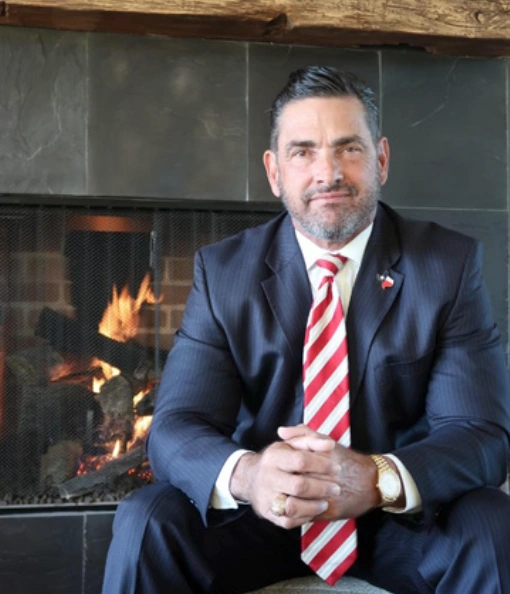
Sam R. Cammack III is a highly experienced criminal defense lawyer and former prosecutor serving the Houston area with over 20 years of legal expertise. Dedicated to protecting his clients’ rights, he has successfully defended cases ranging from misdemeanors to serious felonies.
Sam received his Bachelor’s Degree in Psychology with honors from the University of Houston and graduated Magna Cum Laude with a Doctorate of Jurisprudence. A standout legal scholar, he finished first in his class in eleven different areas of law, received the prestigious Prima Excellencia award, and interned at the 14th Court of Appeals with Justice Eva Guzman. Known for his sharp analytical skills and strategic defense, he remains steadfast in his pursuit of justice for every client.