
Quick Answer
Interview two or three Houston criminal defense attorneys within the same week — free consultations are standard, and attorney-client privilege protects what you say even if you never hire them. Ask what the weaknesses in your case are, how many of your specific charge they have handled in Harris County, and when they last tried a case like yours to verdict. A billboard tells you a firm can afford a billboard. It tells you nothing else.
The One Question That Separates Them
“What are the weaknesses in my case?”
An attorney who names the bad facts before you have paid anything will tell you the truth later, when it matters more.
Key Takeaways
| Privilege covers the free consultation. You can speak honestly, decide the attorney is not the right fit, and what you said stays confidential. No retainer required. | |
| Go to the meeting alone. Bringing a friend into the room can waive privilege as to that conversation. Family belongs in the waiting area. | |
| Compress the timeline, do not extend it. Two or three consultations in one week is diligence. A month of deliberation is overwritten surveillance footage. | |
| Ask what happens if the case does not plead. The most common fee surprise is discovering the amount you paid covered pretrial work only. | |
| An attorney will come to the jail. Whether they will do it before being retained tells you something about how they will handle everything after. | |
| You do not have to prove your innocence. The State must prove every element beyond a reasonable doubt, and that burden never shifts to you. |
This content is general information, not legal advice. Past results do not guarantee a similar outcome.
Choosing the Best Houston Criminal Defense Attorney
You cannot simply count on a billboard or a television commercial to tell you who the best Houston criminal defense attorney is. There is more to choosing an attorney than that. When you have been charged with a crime, you need to make sure that you have strong representation. It may take a little bit of time and a few interviews to choose the attorney for your case. But when you get the optimum ruling in the court, you’ll be glad that you took your time.
Advertising budget measures advertising budget. It tells you a firm can afford a billboard on I-45. It tells you nothing about how many cases like yours that firm has tried, whether the attorney whose face is on the sign will ever appear at your setting, or how they perform when a prosecutor pushes back.
What follows is how to find out what the billboard cannot tell you.
Interview More Than One — and Move Quickly
Whether the lawyer is for you or a loved one, you need to focus on quickly finding a lawyer. There is nothing wrong with talking to multiple Houston criminal defense lawyers in order to find a good match. A free consultation is readily available at most firms. And you should try to take two or three lawyers up on this time so that you can ask questions. It is important to know what they specialize within criminal defense and their track record. The answers to these will be indicative to whether you want the lawyer on your side or if you want to keep looking.
These two instructions pull against each other, and the resolution is to compress the timeline rather than extend it. Schedule your consultations within a few days, not across a few weeks.
Speed matters because defense evidence expires. Surveillance footage at gas stations, apartment complexes, and businesses is commonly overwritten within seven to thirty days. Witnesses relocate and memories drift. Meanwhile the State began building its case the day of the arrest. Two or three consultations in one week is diligence. A month of deliberation is lost evidence.
What to Bring and What to Ask
Bring: any paperwork you received (bond papers, citations, charging documents), the case or cause number if you have it, the arresting agency and date, names and contact information for witnesses, and a written timeline of events while it is still fresh.
Ask these seven questions. They are designed to produce answers that differ meaningfully between attorneys:
- How many cases with this specific charge have you handled in Harris County?
- When did you last try a case like mine to a jury verdict?
- What are the weaknesses in my case?
- What motions do you anticipate filing?
- Will you personally appear at my settings, or will an associate handle them?
- What exactly does your fee cover, and what is billed separately?
- Who do I call when I have a question, and how quickly do calls get returned?
Question three is the most revealing. An attorney who names the evidence that hurts you — in the first meeting, before you have paid anything — is showing you how they will communicate when the case gets difficult. One who tells you only good news now will keep doing that until the day it matters.
Verify independently. The State Bar of Texas maintains a public directory listing license status, admission date, board certifications, and public disciplinary history. Two minutes, and it confirms what marketing cannot.
Tell Your Attorney Everything — Privilege Is Why You Can
When facing criminal charges, make sure that your lawyer knows everything and anything surrounding the case. The smallest amount of information could be significant to your defense or to reducing your exposure. This means that you must be able to trust your Houston criminal defense lawyer completely. If for any reason you don’t feel comfortable with your lawyer, you could leave out crucial information. Then, they won’t be able to do their job to the fullest.
Here is the part that makes this possible, and most people do not know it:
Attorney-client privilege applies to the consultation itself — even if you never hire that attorney. You do not have to pay a retainer to be protected. You can walk into a free consultation, describe your situation honestly, decide that attorney is not the right fit, and what you said remains confidential.
What privilege covers: your communications with the attorney for the purpose of obtaining legal advice. Your lawyer cannot be forced to testify about them.
What it does not cover: statements made in front of third parties who are not part of the legal team. If you bring a friend to the consultation, you may waive privilege as to that conversation. Bring family for the waiting room, not the meeting. There is also a narrow crime-fraud exception covering communications seeking help to commit a future crime — it does not apply to telling your lawyer what already happened.
The practical point: an attorney blindsided at trial by a fact you withheld cannot protect you from it. Prosecutors do not care whether your lawyer knew. They only care that they found it.
Jail Visits and What They Reveal
If you or a loved one is already in custody, a Houston criminal defense attorney can come to you. When the attorney comes to the jail, you can still meet, ask questions, and get guidance. This is also a good indication of what your lawyer is willing to do for you. They can immediately start advising you on what you should and shouldn’t be doing before you have even agreed to them becoming your lawyer.
Two things worth knowing about jail meetings:
Attorney visits are generally not subject to the same recording as ordinary visitation. Regular jail calls and video visits are recorded and routinely reviewed by prosecutors. Properly conducted attorney meetings are privileged. This is exactly why the first substantive conversation about your case should happen with a lawyer present, not on a recorded line with a relative.
Whether an attorney will actually come is informative. An attorney willing to drive to the jail before being retained is showing you something about how they will handle the rest of the case.
On Cost
While cost should be a factor, you don’t want to sell yourself short, either. There is usually a middle ground to what a lawyer will charge and you should be asking the questions so that you don’t get any surprises.
Most Houston criminal defense attorneys charge flat fees rather than hourly rates, frequently staged — one amount covering pretrial representation, an additional amount if the case proceeds to trial. Ask specifically what is included. Investigators, expert witnesses, and appellate work are commonly billed separately, and those can be substantial in a contested case.
Get the fee agreement in writing before you sign anything. Ambiguity about money reliably becomes conflict later.
On the “surprises” point: the most common one is discovering that the fee you paid covered pretrial work only, and that trial requires a second payment you did not budget for. Ask directly what happens if the case does not resolve by plea.
Weigh the cost against what a conviction costs — lost income, closed employment doors, professional license consequences, and for noncitizens, potential immigration exposure. Measured that way, the fee is rarely the expensive part.
Match the Attorney to the Charge
Lawyers are critical in the courtroom. You must have legal representation and you need someone genuinely equipped for your case. You don’t want a sex crimes lawyer defending you if someone accused you of possession of drugs. It’s just like you wouldn’t want a heart surgeon performing brain surgery on you.
That analogy is the right one, and it is worth spelling out why it holds. Different charges run on entirely different bodies of law:
- Drug cases turn on search and seizure — was the stop lawful, was consent valid, did the warrant have probable cause, was the lab analysis reliable.
- DWI cases turn on breath instrument maintenance records, blood draw chain of custody, and field sobriety test administration.
- Assault cases turn on Chapter 9 self-defense law, witness credibility, and prior inconsistent statements.
- Fraud and theft cases turn on documents, forensic accounting, and aggregation rules that convert small amounts into felonies.
Same constitution, completely different leverage. An attorney who works your charge area already knows where the State’s case usually breaks down. Ask them — that question separates people faster than any other.
Take the Time Now
When you take the time to interview a Houston criminal defense attorney and ask real questions, you end up with representation you actually chose rather than representation you settled for. Ultimately it’s you that could do the time, so take the time in the beginning for your legal representation.
One last point worth being clear about: you are not required to prove your innocence. The State of Texas must prove every element of the offense beyond a reasonable doubt, and that burden never shifts. You have an absolute right not to testify, and a jury is instructed it cannot hold your silence against you. A defense built around forcing the State to meet its burden is often stronger than one built around proving a negative.
Bring the questions. Ask the uncomfortable ones. The attorney who welcomes them is usually the one you want.
Frequently Asked Questions
Is what I say in a free consultation confidential if I do not hire the attorney?
How many attorneys should I interview, and how fast should I decide?
What should I bring to a criminal defense consultation?
Should I really tell my lawyer everything, even the bad facts?
Will an attorney come to the jail before I hire them?
How are criminal defense fees structured, and what surprises should I avoid?
How do I check whether an attorney is in good standing?
Does it really matter if the attorney handles my specific type of charge?
Come with your questions. The consultation is free and what you say is confidential either way.
Schedule a Free ConsultationThis content is general information, not legal advice. Past results do not guarantee a similar outcome.
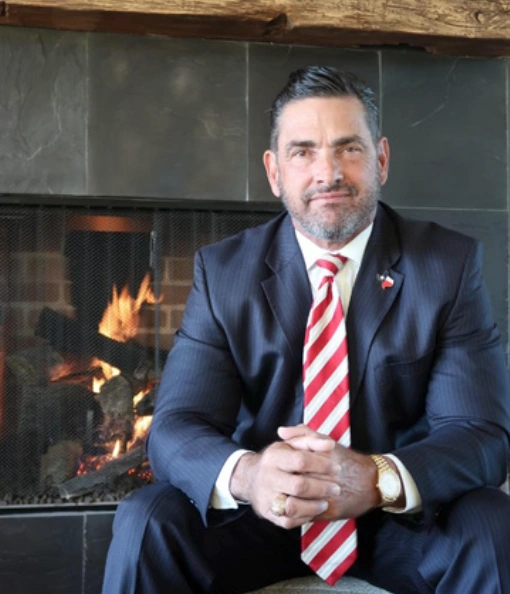
Sam R. Cammack III is a highly experienced criminal defense lawyer and former prosecutor serving the Houston area with over 20 years of legal expertise. Dedicated to protecting his clients’ rights, he has successfully defended cases ranging from misdemeanors to serious felonies.
Sam received his Bachelor’s Degree in Psychology with honors from the University of Houston and graduated Magna Cum Laude with a Doctorate of Jurisprudence. A standout legal scholar, he finished first in his class in eleven different areas of law, received the prestigious Prima Excellencia award, and interned at the 14th Court of Appeals with Justice Eva Guzman. Known for his sharp analytical skills and strategic defense, he remains steadfast in his pursuit of justice for every client.